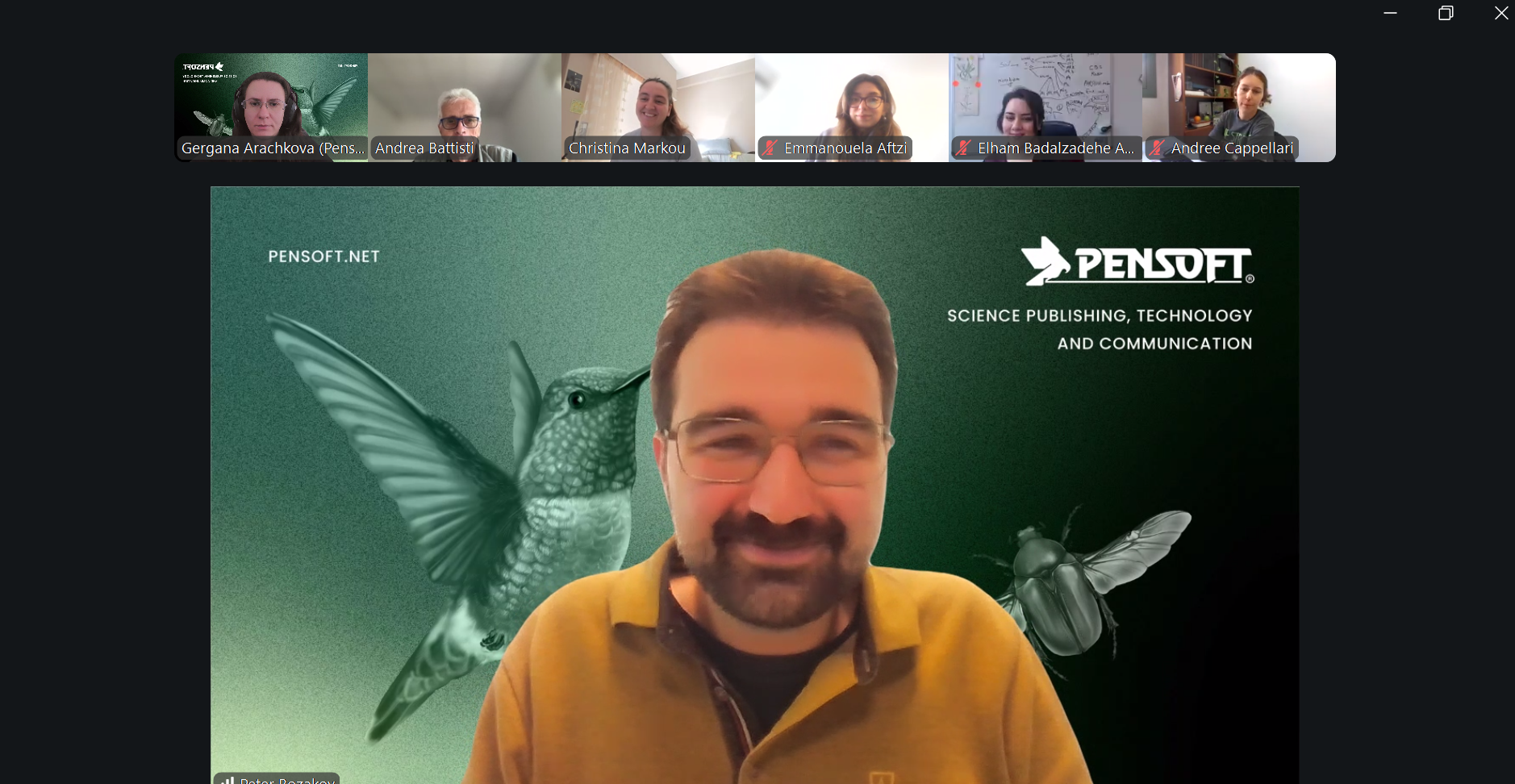
Second Young Scientist Meeting of sister projects FORSAID, STELLA and CERBERUS focuses on science communication
On 23 October 2026, around 30 participants from the Horizon Europe projects FORSAID, STELLA and CERBERUS met online for the second edition of their joint Young Scientist Meeting. The format aims to connect early-career scientists across the three sister initiatives, which share the goal of improving pest detection and monitoring through technological solutions. FORSAID concentrates on forest pests, while its two counterparts mainly target agricultural ones. The first edition, held on 4 June 2025, gathered 24 PhD students and postdoctoral researchers. Together, they explored overlaps in their research and discussed possible working groups on remote sensing, communication, citizen science and pest surveillance.
On this occasion, the spotlight fell on outreach as one of the topics raised at the time. More specifically, the agenda covered best practices that young scientists can apply to maximise the visibility of EU-funded projects. Led by Pensoft Publishers, FORSAID's communication partner, the two-hour programme paired an introductory talk and Q&A with an interactive exercise.
Senior Communications Officer Peter Bozakov opened proceedings with a presentation built on the premise that sound findings alone do not guarantee societal impact. With that in mind, he provided a useful introduction to science outreach and its place in EU-funded initiatives, where it sits alongside dissemination and exploitation. His talk then explored how to reach four key audiences effectively - academia, practitioners, policy-makers and the general public - through a range of tools and channels, from scientific posters and factsheets to policy briefs and podcasts. Practical tips completed the picture, among them adapting explanations to different levels of prior knowledge and framing research as a story.
Next, attendees stepped into the shoes of science communicators themselves. The exercise centred on a recent Journal of Pest Science study, in which a Canadian research team used artificial intelligence to detect and count the blueberry fruit fly (Rhagoletis mendax) on sticky trap images. Split into two groups, they spent 30 minutes in breakout rooms, with Mr. Bozakov and his colleague Gergana Arachkova each overseeing one and advising on how to approach the task. The first group drafted a public release abstract and a LinkedIn post promoting the article, while the second outlined the structure and content of a factsheet based on it. Afterwards, the two teams swapped outputs, with a spokesperson from each commenting on the other's work before the Pensoft representatives shared their own feedback with both. In this way, the exercise helped participants put the theory from the opening presentation into practice.
Taken together, the two segments of the programme gave early-career researchers concrete guidance on making their work accessible and relevant to diverse audiences. As FORSAID, STELLA and CERBERUS continue to develop innovative solutions for pest monitoring, such know-how can help their results reach those who stand to benefit. The meeting also offered the young scientists of the three sister projects another opportunity to connect and exchange views.
Explore FORSAID's cooperation with STELLA, CERBERUS and other research initiatives on its synergies page.